
To the women who wrestled first: Thank you
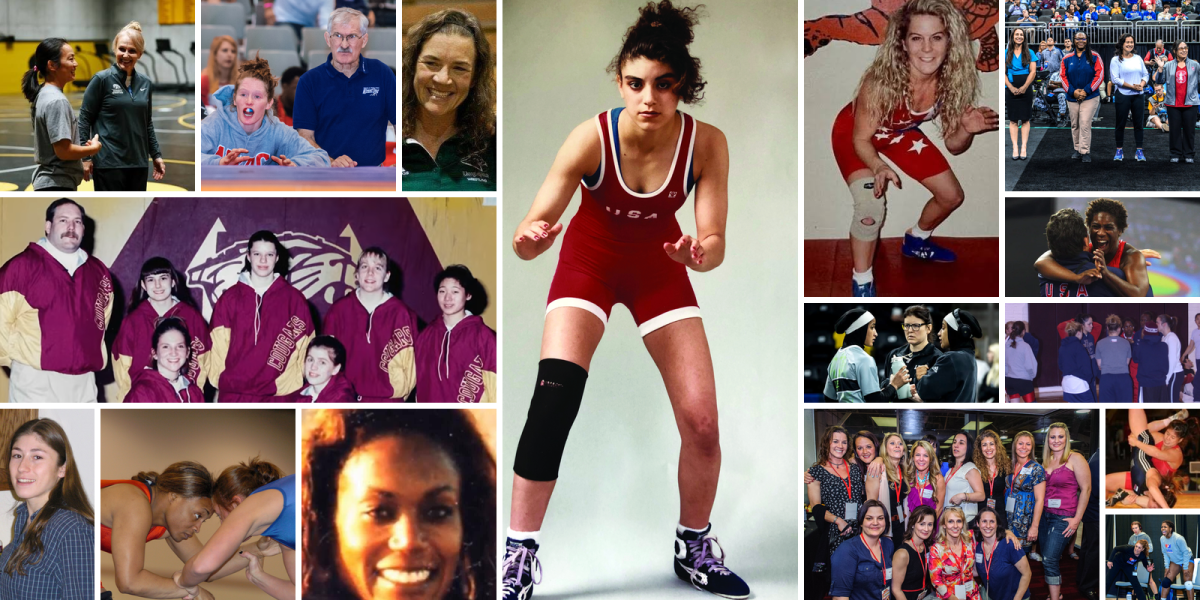
To the women who wrestled before anyone made room for you,
For the first time in history, women’s wrestling has NCAA national champions to celebrate this Thanksgiving. In March, McKendree edged Iowa 171-166 to win the inaugural NCAA Women’s Wrestling Championships, and Grand Valley State’s Katie Lange won the 138-pound title to become the first NCAA champion in women’s wrestling.
That championship came less than two years after Sarah Hildebrandt and Amit Elor won gold in Paris, the first time U.S. women won two Olympic wrestling titles at the same Games. It came nearly eight months before the U.S. women beat Japan 137-135 at the Senior World Championships in Astana, Kazakhstan, for their first world team title since 1999. Everest Leydecker and Adaugo Nwachukwu, who are both wrestling in college this season, won world titles there, and all six U.S. medalists have had the opportunity to wrestle in college.
None of that came out of nowhere. It came from you.
You wrestled when the sport wasn’t ready to welcome you. In 1990, the first year it was tracked, only 112 girls wrestled in high school. Afsoon Roshanzamir Johnston, born in Iran, talked her way onto the boys’ team at Independence High School in San Jose, California, as a freshman. Tricia Saunders grew up wrestling boys like Zeke Jones in Michigan. Shannon Williams-Yancey wrestled two years on the boys’ team at Chaffey High School in Ontario, California. Andrea Carstens Yamamoto wrestled at Richland High School in Washington from 1986 to 1989, where almost every opponent forfeited to her. She went on to make five world teams. She said yes to every opportunity, even when it meant going into debt, because she feared the sport could disappear at any moment. Tela O’Donnell Bacher had to petition her school board and remind it of Title IX just to wrestle in middle school. She made the first U.S. Olympic women’s team in 2004, and that night a male Olympic wrestler whose Trials final had been wrestled at the same time as hers asked her, “Who do you think people were watching?” Then he turned and walked away.
When you arrived at college, there usually wasn’t a team waiting for you. In 1995, 16 women joined the men’s team at CSU Bakersfield, and several of them had to file a student-rights grievance to get there. Patricia Miranda started at 125 pounds for Stanford’s men’s team, and Sara McMann wrestled on the men’s team at Lock Haven. Jenny Wong, a Minnesota native, wanted to wrestle on the men’s team at the University of Wisconsin as a freshman in 1999 and received a letter stating Wisconsin couldn’t offer her the opportunity to participate. She transferred to Lock Haven and won a world bronze in 2003.
Some of you had a team only because someone built one from scratch. Doug Reese launched the first varsity women’s college team at Minnesota-Morris in 1993-94. Mike Machholz started the program at Missouri Valley, Lee Allen built Menlo and Archie Randall built Oklahoma City University. They recruited women who’d been told wrestling wasn’t for them and drove vans across the country to find matches.
Even when you found a team, you had to find someone to wrestle. The first dual meet between two U.S. women’s college teams didn’t happen until 1999, when only three colleges sponsored the sport. Only five teams entered the first women’s college nationals in 2004. And when few in the wrestling media paid attention to you, USA Wrestling’s Gary Abbott told your stories.
And still, you won. The first women’s World Championships were held in 1987 without a U.S. team. Two years later, the United States sent one, and Johnston won a world bronze, the first world medal by an American woman. Asia DeWeese and Leia Kawaii won silver. Marie Ziegler made that first team after entering a tournament at San Francisco State without knowing it was a world qualifier, then won world silver medals in 1990 and 1991. Williams-Yancey went on to win four world silver medals from 1991 to 1997. Saunders won four world titles, starting in 1992, and helped the U.S. win its first world team title in 1999.
In 2002, Terry Steiner, then a Wisconsin men’s assistant coach, was reluctant when USA Wrestling’s Rich Bender asked him to lead the U.S. women’s national team. He worried about what his peers would think and feared he would never get back into college coaching. His wife, Jodi, helped convince him by asking what would happen if their young daughter wanted to wrestle someday. Steiner promised Bender two years. He has led the team ever since.
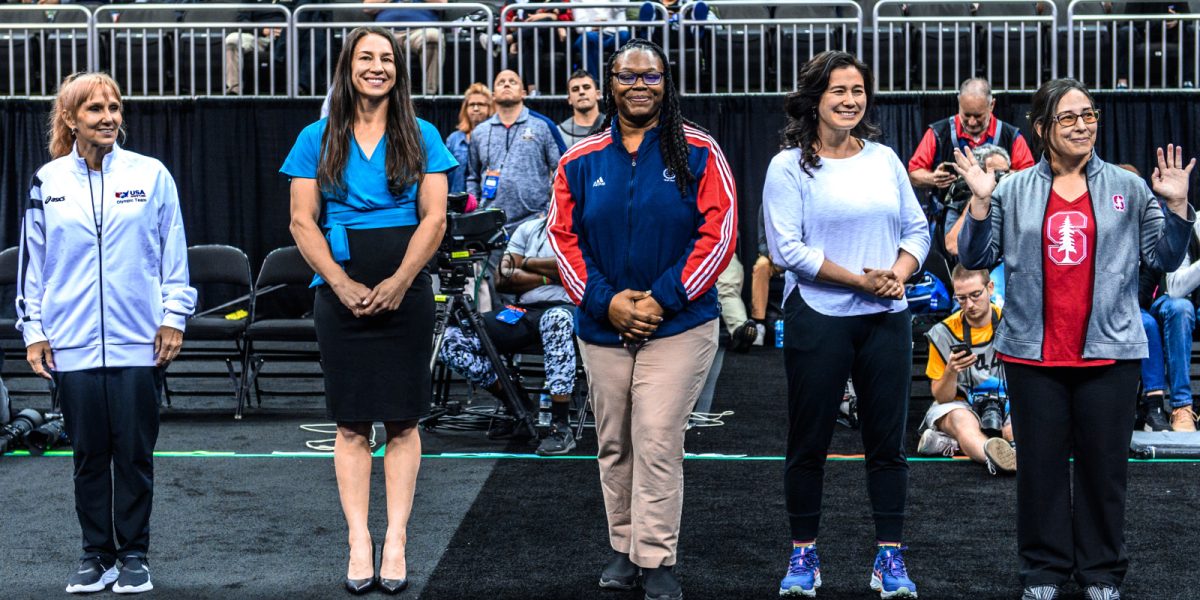
When women’s wrestling debuted at the Olympics in 2004, college pioneers made up the entire U.S. team. Miranda won bronze in Athens, the first Olympic medal by an American woman, and McMann won silver. In 2016, Helen Maroulis won the first Olympic gold by an American woman. Kristie Davis won both of her world titles and most of her nine world medals while raising a young daughter. Adeline Gray, a six-time world champion, gave birth to twins in 2022 and won world bronze the next year.
Black women were part of this sport from the start, often without the recognition they deserved. On that first world team in 1989, Kawaii became the first Black American woman to win a world medal. Tina George won world silver medals in 2002 and 2003, becoming the first Black American woman to win multiple world medals. Toccara Montgomery became the first Black American woman to wrestle in the Olympics in 2004. Iris Smith became the first Black American woman to win a world title in 2005, and Randi Miller, now the head coach at Texas Woman’s University, became the first Black American woman to win an Olympic medal in 2008. Tamyra Mensah-Stock, a two-time college national champion at Wayland Baptist, became the first Black American woman to win Olympic gold in Tokyo.
Many of you came back to coach, to give the next generation what you had to fight for. Saunders and Johnston coached U.S. world and Olympic teams. Ashley Flavin, who wrestled at Oklahoma City University when only a handful of colleges sponsored the sport, has led Life University since 2017-18. In 2021, she became the first woman to lead a college team to a National Duals title, and five years later, she became the first woman to lead an NAIA program to back-to-back NAIA national championships.
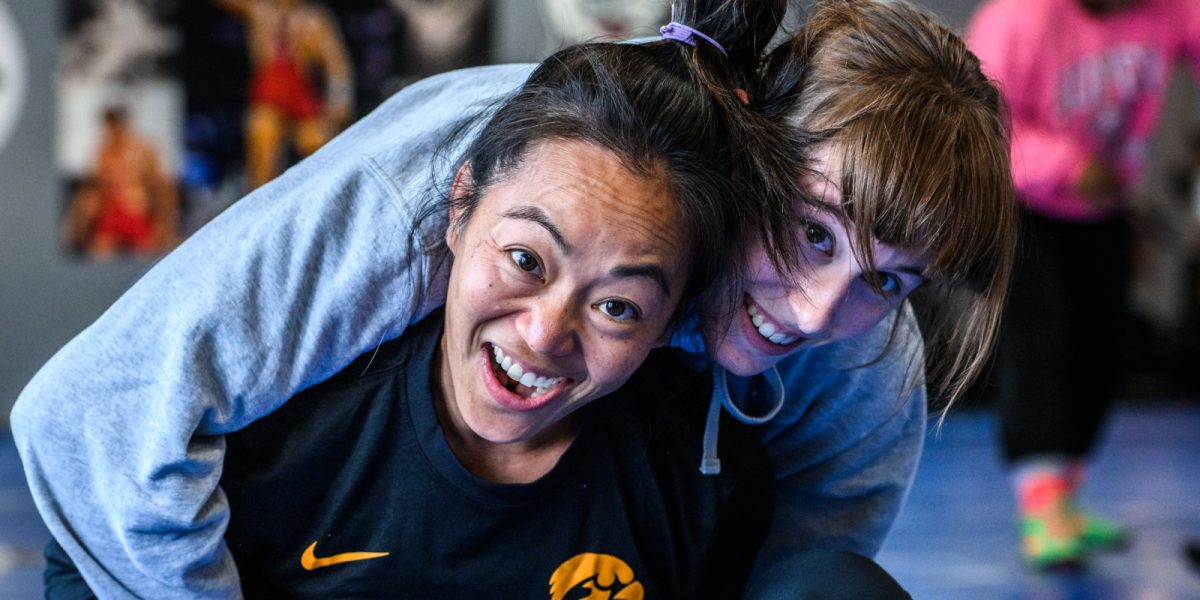
Clarissa Chun, a world champion and Olympic bronze medalist, won the first official girls state championship in Hawaii in 1998. She got her college wrestling chance at Missouri Valley and became the first head coach at Iowa, the first Power Four women’s wrestling program. She was the perfect hire at the perfect time: a trailblazer with an infectious personality and a brilliant wrestling mind, chosen to lead a program at a school that has long been at the forefront of equity in women’s sports. Iowa owes much of that legacy to the late Christine Grant, its longtime women’s athletics director and a pioneer and leading voice in the fight for gender equity in athletics. Chun’s teams won back-to-back national titles in 2024 and 2025. When Missouri Valley and Iowa met in a dual, Chun made a point of hugging Machholz, the man who started the program that gave her that first chance. Chun and her team adopted the motto “For Her”: for those who came before, for each other and for the next generation.
Because you kept showing up, the doors kept opening. In 2006, Michaela Hutchison Schmitz of Alaska became the first girl to win a state title in an all-boys bracket, then won three college national titles at Oklahoma City University. Sally Roberts won only one match in high school, then won two world bronze medals and founded Wrestle Like A Girl, which led the push for the NCAA to recognize women’s wrestling as a championship sport. In 2017, Presbyterian College became the first Division I school to add women’s wrestling, and Cassy Lopez signed there the next spring as the first woman with a Division I wrestling scholarship. The NCAA named women’s wrestling an emerging sport in 2020, and Delaware State became the first historically Black college or university with a Division I program in 2025-26, led by Kenya Sloan, a college national champion at Campbellsville. Today, girls wrestle for high school state titles in at least 46 states and Washington, D.C., and college athletes have conference tournaments, an NCAA bracket, press conferences and every session streamed on ESPN. That’s what you were fighting for: a sport so normal that a girl can sign up for wrestling the same way she’d sign up for soccer.
But the work you started isn’t finished. In 2025-26, 88,771 girls wrestled in high school, but only about 250 colleges sponsor women’s wrestling across the NCAA, NAIA, NJCAA and 3C2A. Most of those high school girls will never wrestle in college. More of them should get to wrestle freestyle, the style of college and the Olympics, in high school. Only New York sanctions girls wrestling under freestyle rules, and every other state needs to follow.
Fewer than 10% of NCAA women’s wrestling programs are in Division I. Over the past year, Iowa State, Kent State, Mercyhurst and Columbia have added Division I programs, and as an Iowa State graduate, I was especially proud the day my alma mater announced its program. But the sport needs more Power Four schools, like Oklahoma State, Stanford and Minnesota, to add NCAA women’s wrestling programs. It needs more women in head coaching jobs, officiating and leadership, from every race, ethnicity and background, so the girls on the mat can see themselves in the people leading the sport. It needs coaches who are paid like professionals and programs funded to last. You opened the door. The job now is to make the room big enough for every girl who wants in.
And some of the people who opened that door aren’t here to see how far we’ve come. Reese died in August 2022 at 65, more than two years before the NCAA made women’s wrestling a championship sport. Before that first dual meet in 1999, he said it was something he had dreamed of for five years.
Allen, a two-time Olympian, became the first women’s coach at Menlo after more than three decades of community college coaching. He coached his daughters Sara and Katherine to national titles. He died in June 2012 at 77, six years before the National Wrestling Hall of Fame inducted him as a Distinguished Member. His family has continued to push the sport forward. His wife, Joan Fulp, works with states to grow girls high school wrestling for USA Wrestling, and Katherine, now Katherine Shai, runs LuchaFit, which creates resources for female wrestlers.
Malissa Sherwood was the first woman to receive a full scholarship to wrestle at Missouri Valley. She was part of its powerhouse program in the early 2000s, won a Pan American title, fought in mixed martial arts and later coached young wrestlers in California. She died of cancer in April at 50, a month after the sport she helped build crowned its first NCAA champions.
Sarah Tolin was the first girl to compete in Wyoming high school wrestling. She wrestled at Neosho County Community College when it had one of only six women’s varsity teams in the country, and she died in 2005 at 23. She never saw a scholarship or an NCAA bracket. Neither did others whose names we may never know. This sport belongs to them, too.
Most of you will never show up in an article or record book. Some of you wrestled a single season on a boys’ or men’s team and never won a varsity match. Some of you paid your own way to compete in open tournaments. Some of you were the only girl in the room every day for four years. You didn’t wrestle for scholarships or headlines, because for most of you, neither was an option. What you got was the chance to wrestle, and you took it when it was hard to take.
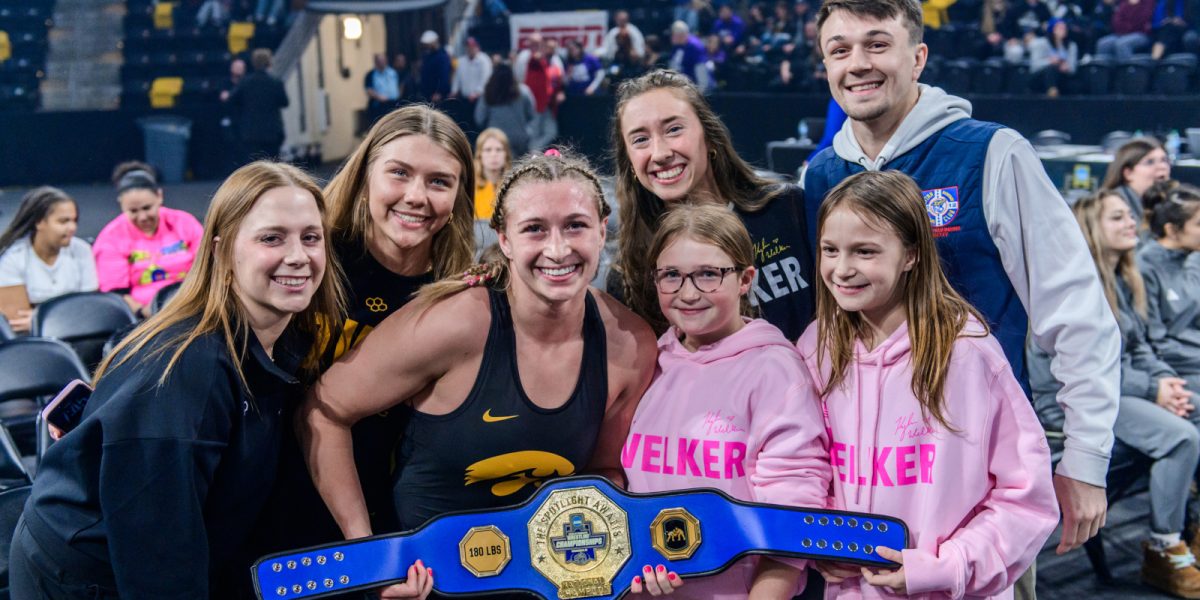
You couldn’t have known what the sport would become: NCAA championship belts, Olympic gold medals, teenagers winning senior world titles, a 10-year-old girl somewhere watching Kylie Welker win an NCAA title and deciding she wants to be just like her. Every champion we celebrate today stands on the shoulders of the medalists in the record books and of the girl who never won a varsity match but came back the next season anyway. You kept wrestling, and because you did, all of this became possible.
So this Thanksgiving, from all of us at HerMat: Thank you. Thank you for wrestling when it would have been easier to quit. Thank you for talking your way onto boys’ teams, filing the grievances, driving the vans and filling the brackets. Thank you for building a sport worth covering, full of incredible athletes, coaches and people whose stories we get to tell. And thank you to those of you who were told you didn’t belong on the mat and are now raising daughters who will never hear those words.
With gratitude,
Andrew Hipps
HerMat Founder